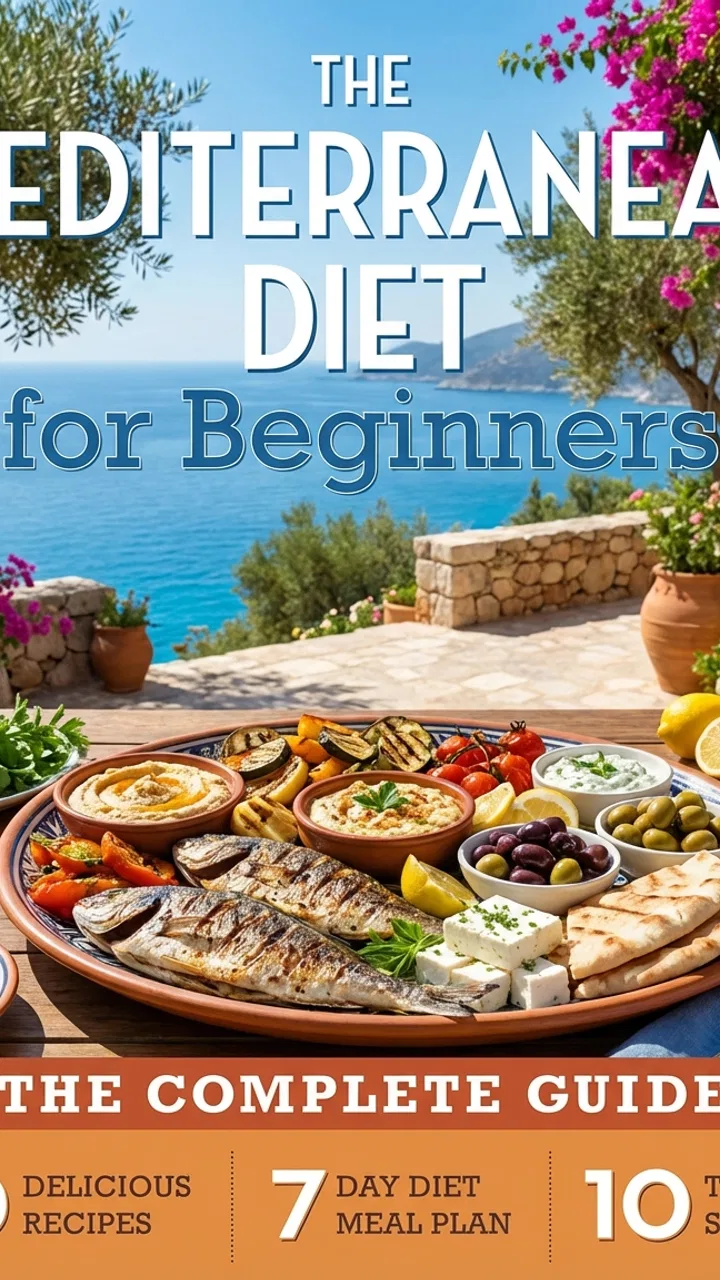
Mediterranean Diet Beginner
- 2.8
- Rating
- 10.00K
- Installs
- Free
- Price
 Analysis by App-foxy
I approached Mediterranean Diet Beginner as a practical Food & Drink companion rather than a complete nutrition service. Its focus is clear: help someone understand Mediterranean-style eating through recipes and guidance, with weight management and healthier habits as the broader goals. After spending time with it, I found the app most useful for people who need a simple starting point, not for experienced cooks looking for a highly customizable meal-planning system.
The app is free to download, although some items are offered as in-app purchases at $9.99 each. That distinction matters because the free experience is best treated as a way to judge whether the approach and presentation suit you before committing to anything extra. It is aimed at Everyone, runs on Android 7.0 and later, and comes from developer Kevin Ton. Its current version is 2.6.5.1, while the app first appeared on Jun 11, 2022.
How the app feels in everyday use
The strongest part of the experience is its beginner-friendly direction. Mediterranean eating can sound vague when explained through broad advice about vegetables, grains, fish, olive oil and moderation. An app like this has a useful role when it turns those ideas into dishes I can actually imagine preparing. Instead of treating the diet as a strict short-term challenge, I found the concept more helpful when viewed as a collection of repeatable habits.
You May Also Like

 AccuWeather: Weather Radar
AccuWeather Review: A Quick, Clear Forecast for Everyday Decisions
For everyday plans, the best forecast is the one you can understand quickly. AccuWeather makes rain timing, radar, and local conditions easy to act on, with a few trade-offs.

 Hill Climb Racing
Why Hill Climb Racing Still Turns Crashes Into One More Run
A tiny car, a bumpy hill and one more upgrade: Hill Climb Racing keeps resurfacing because its simple chaos makes every near-miss feel personal.

 AliExpress - Shopping App
AliExpress Makes Global Shopping Feel Personal, but Shoppers Bear the Risk
AliExpress turns a global marketplace into a pocket-sized discovery engine. Its reach is useful, its shopping loop compelling, and its trade-offs easy to miss.

 Lords Mobile: Kingdom Wars
Lords Mobile Is a Kingdom-Building Routine, Not a Quick Match
A case-by-case verdict on the building, battles, device demands, and social commitments that make Lords Mobile rewarding for some players and exhausting for others.

 PDF Scanner app - TapScanner
TapScanner Makes Paperwork Easier to Capture, Check, and Share
TapScanner makes scanning with a phone feel less like a rescue operation and more like a dependable step in getting work done. Its capture tools are useful, though not flawless.

 Block Blast!
 Shows How Much a Puzzle Game Can Leave Out
A quiet grid game shows why puzzle players increasingly value instant clarity, repeatable skill and low-pressure play—and where the genre still needs to catch up.
More From Our News Desk
View All News


I would use it on a Sunday evening while deciding what to cook during the week. Rather than searching randomly across recipe websites, I could use the app as a focused source of ideas, then choose meals that match the time and ingredients I already have. That workflow is more realistic than expecting a beginner to change every meal overnight. The app works best as a prompt to make better choices consistently.
The emphasis on guidance is also important. A recipe alone tells me what to put in a pan, but guidance can explain why certain ingredients appear often and how they fit into the wider pattern. For someone unfamiliar with Mediterranean food, that context can make the recipes feel less like isolated dishes. I am more likely to continue when I understand the principle behind a meal instead of simply following a list.
Still, I would not describe this as a replacement for professional dietary advice. The app can support general healthy eating, but personal needs vary widely. Allergies, medical conditions, pregnancy, athletic training and prescribed diets all require more care than a general beginner guide can provide. I would use it as an educational cooking aid, not as a medical plan or a promise of weight loss.
A useful starting point for new cooks
What makes the app approachable is the narrowness of its purpose. Many food apps combine recipes with restaurant discovery, grocery delivery, calorie databases and social feeds. That can be convenient, but it can also bury the main task: deciding what to eat. Mediterranean Diet Beginner keeps attention on one eating style, which is valuable when I am trying to build a routine without being distracted by unrelated content.
That focus also creates a trade-off. If I want a broad recipe catalog covering multiple cuisines, this is not the obvious choice. Someone who cooks for a family with very different preferences may get more value from a general recipe platform with filters for allergies, preparation time and serving size. This app makes more sense for a reader who has already decided to explore Mediterranean-style meals and wants a dedicated introduction.
One practical tip is to begin with recipes that share ingredients. Buying a large collection of unfamiliar products can make a new diet feel expensive and complicated. I would first identify a few meals using overlapping staples, then add less familiar ingredients gradually. That approach reduces waste and gives me a chance to learn which flavors I genuinely enjoy rather than assuming every traditional ingredient will suit my taste.
Where the guidance helps, and where it needs judgment
A beginner guide is most valuable when it prevents an all-or-nothing mindset. I do not need to transform breakfast, lunch and dinner at the same time to benefit from a more balanced pattern. I can start by adding a vegetable-based lunch, replacing a heavily processed snack, or preparing a simple fish or bean dish during the week. The app’s subject naturally supports that gradual approach.
There is also a less obvious benefit in using recipe guidance to improve shopping decisions. Before opening a supermarket delivery app or writing a grocery list, I would scan several meals and note recurring ingredients. This creates a personal core pantry. Over time, I would spend less effort deciding what to buy because the same useful staples could support several different dishes.
However, I would check portions and substitutions carefully. “Mediterranean” does not automatically mean every version of a dish is light, and generous amounts of oil, cheese, bread or calorie-dense toppings can change the balance of a meal. I would not assume that following the theme alone guarantees a calorie deficit. The app can inspire healthier cooking, but I still need to apply common sense to serving sizes and my own goals.
What the current version means for users
The current release, 2.6.5.1, is the version I would evaluate before deciding whether to keep the app installed. Its presence shows that the product has continued beyond its original launch, but a version number by itself does not tell me that every hoped-for feature is available. I would judge it by how quickly I can move from browsing to choosing a meal, how clear the instructions feel, and whether the content fits my actual routine.
For existing users, updating is worth considering when an app has a newer release available, especially if earlier use involved awkward navigation or inconsistent presentation. At the same time, I would not expect a version change to turn a focused beginner guide into a full meal-management platform. The core value remains the same: learning the style of eating and finding recipes that make it easier to practice.
The product has reached over 10K installs and holds an average rating of 2.8 from around 10 ratings, with 5 written reviews. I would treat that public response as a reason to try the free portion personally rather than relying on popularity as proof of quality. The audience is large enough to show that people are finding it, but the rating is not strong enough for me to recommend paying for extras without first testing the experience.
That is especially relevant because the app is free while individual in-app items cost $9.99 each. I would look closely at what an optional item adds before buying: whether it provides genuinely useful material for my cooking routine, or simply more content that I may never use. A paid addition can be worthwhile for a committed learner, but it is harder to justify if I only want occasional recipe inspiration.
How it compares with familiar alternatives
Compared with a general recipe website, this app offers a more concentrated path into one food tradition. A website may provide more variety and easier access to user comments, substitutions or visual demonstrations, but it can also send me through endless searches. Here, the narrower subject can reduce decision fatigue. I am not asking, “What should I cook from millions of possibilities?” I am asking, “Which Mediterranean-style option fits today?”
Compared with a calorie-tracking app, the difference is even clearer. A tracker is better when my priority is logging food, monitoring energy intake or reviewing numerical trends. This app is better when my problem is inspiration and basic understanding. I would combine the two only if tracking is genuinely helpful to me; otherwise, adding too much measurement could make a healthy routine feel like administrative work.
Compared with a dedicated meal-planning subscription, Mediterranean Diet Beginner appears more approachable for someone at the beginning. A structured planner may win if I need automatic shopping lists, household portions or a calendar that tells me exactly what to cook. I would choose that alternative for a busy family. I would choose this app when I want to learn the pattern first and retain control over which meals fit my schedule.
There is a useful middle ground between those options. I could use the app for ideas, save a short list of meals externally, and build my own weekly rotation. That takes more manual effort than an automated planner, but it can produce a routine that reflects my preferences instead of forcing me into a fixed schedule. For me, that is one of the app’s better use cases: it teaches enough to help me become less dependent on it.
A realistic week with the app
Imagine I have work commitments from Monday to Friday and little patience for complicated cooking after six in the evening. I would not select five ambitious recipes. I would choose a couple of simple dinners, one make-ahead lunch and perhaps a flexible bean or vegetable dish that can absorb leftovers. The app’s value in that situation is not just the recipe itself; it is the nudge to plan around ingredients and preparation time.
On Monday, I might prepare extra vegetables or grains for another meal. On Wednesday, I could use a recipe as a framework while substituting an ingredient I already have. At the weekend, I would try something more involved and decide whether it deserves a place in the regular rotation. This workflow turns the app into a learning tool rather than a daily authority.
A second useful scenario is a person who eats too many takeaway meals because grocery shopping feels directionless. Browsing focused recipes before shopping can supply a short list and a reason to buy particular ingredients. The important step is to keep the first shop modest. Purchasing every ingredient suggested by several recipes could create waste, while selecting overlapping items makes the experiment more affordable and less intimidating.
For a couple or family, I would involve everyone in choosing meals rather than assuming the app can solve different tastes automatically. One person might prefer fish, another beans, and someone else may dislike a particular vegetable. The app can provide the theme and ideas, but the household still needs to negotiate. That is a strength of using it as a flexible guide, though it also means users wanting automatic family personalization may find it limited.
Remaining friction before I would rely on it
The rating of 2.8 makes me cautious. With only around 10 ratings, it is not a definitive verdict, but it signals that the experience may not satisfy everyone. I would pay attention to small sources of friction: whether recipe instructions are easy to follow while cooking, whether browsing feels smooth, and whether the free material is substantial enough to establish trust.
I would also want to know how well the content handles real kitchen questions. Beginners often need more than a list of ingredients. They may wonder what can be substituted, how to recognize doneness, how to store leftovers or how to scale a dish. If the app leaves those decisions entirely to the reader, a novice may still need to search elsewhere. That does not make the app useless, but it changes it from a complete cooking companion into a source of direction.
Another limitation is that healthy eating is affected by budget, culture, equipment and time. A recipe that looks simple may not be practical for someone with a small kitchen or limited access to fresh ingredients. I would adapt rather than abandon the approach, using the app’s general principles to guide substitutions. Still, users who need detailed affordability planning or ingredient-by-ingredient alternatives may prefer a more specialized service.
The paid structure deserves the same careful approach. Since the app is free to start but includes $9.99 items, I would not buy immediately after reading a promising description. I would first prepare at least one meal from the accessible content, see whether the instructions fit my skill level, and decide whether the app has earned a place in my routine. That simple trial protects against paying for material that sounds useful but does not change my behavior.
Who should try it, and who should skip it
I would recommend trying it to a beginner who wants a focused introduction to Mediterranean-style cooking and prefers practical recipes over a technical nutrition textbook. It may also suit someone who keeps searching for healthier dinner ideas but needs a consistent theme to stop bouncing between unrelated sources. The Everyone age rating makes it broadly accessible, although the responsibility for adapting meals still belongs to the user.
I would be more reserved for advanced home cooks. If I already know how to build balanced Mediterranean meals, I may find the beginner framing too basic. Likewise, people seeking detailed macro tracking, medical nutrition support, automatic grocery lists or extensive dietary filters should look for an app designed around those specific needs.
I would also skip it as my primary tool if I need certainty about weight-loss results. The subject may support healthier choices, but no recipe app can guarantee an outcome that depends on portions, activity, health, sleep and many other factors. I would use it to improve the quality and variety of meals, then evaluate progress realistically rather than treating the app as a shortcut.
What I would watch as the product develops
For future updates, I would watch for improvements that make the beginner experience more practical without turning it into a cluttered platform. Clearer preparation guidance, useful substitutions, better organization for weekly cooking and ways to reuse ingredients would have a direct effect on whether I return. Those changes would matter more to me than simply adding a larger collection of recipes.
I would also look for a clearer relationship between the free experience and paid items. Users should be able to understand the value of an optional purchase before spending money. Transparent organization would help people decide whether they need more guidance or whether the free material already meets their needs.
Existing users should judge updates by everyday results. Can I find an appropriate dish faster? Can I cook it without leaving the app repeatedly to solve basic questions? Can I turn several recipes into a sensible shopping plan? Those are better tests than a new version number alone. Product evolution matters when it removes effort from the routine, not merely when it changes the label on the release.
My final view is cautiously positive. Mediterranean Diet Beginner has a clear purpose, a friendly entry point and a useful focus for people who want to move from vague healthy-eating intentions to actual meals. I like it most as a starting framework: browse, choose a few compatible recipes, shop modestly, cook, adapt and gradually build a personal rotation.
I would not present it as a complete nutrition system, an automated planner or a guaranteed weight-loss solution. The modest average rating and paid extras mean I would test the free experience carefully before spending more. Even so, for a newcomer who wants one focused place to begin exploring Mediterranean-style food, the best value is in turning guidance into a repeatable weekly habit. Used with that expectation, it can be a helpful companion rather than another app that promises more than a busy kitchen can deliver.
FAQs for Mediterranean Diet Beginner
01What is Mediterranean Diet Beginner, and who is it designed for?
Mediterranean Diet Beginner is an introductory app for people who want to understand and follow the Mediterranean-style way of eating. It is generally aimed at newcomers rather than experienced meal planners, explaining the role of vegetables, fruit, legumes, whole grains, fish, olive oil, nuts, and moderate portions. It can be useful if you want simple guidance, although individual health goals may require professional advice.
02What kind of content and guidance does the app provide?
The app typically focuses on practical education and beginner-friendly guidance, such as recommended foods, ingredients to limit, meal ideas, and basic principles of Mediterranean eating. Depending on the version installed, it may also include recipes, planning suggestions, or nutritional information. Users should review serving sizes and recommendations carefully, because the app should support—not replace—a personalized diet plan from a qualified healthcare professional.
03Can Mediterranean Diet Beginner help with weight loss?
The Mediterranean diet is often associated with balanced eating and may support weight management when combined with suitable portions and regular physical activity. However, Mediterranean Diet Beginner should not be treated as a guaranteed weight-loss program. Results vary according to calorie intake, lifestyle, medical conditions, and consistency. Anyone with significant weight concerns should use the app as general education and consult a doctor or registered dietitian.
04Is the app suitable for people with allergies, diabetes, or other medical conditions?
The app may offer useful general food ideas, but it cannot automatically make every recommendation safe for people with allergies, diabetes, kidney disease, digestive disorders, or other conditions. Some Mediterranean ingredients, including nuts, seafood, dairy, or wheat, may need to be avoided or adjusted. Always check ingredients and nutrition details, and ask a healthcare professional before making major dietary changes or following the app’s suggestions.
05Is Mediterranean Diet Beginner free to download, and does it require an internet connection?
Availability, pricing, advertisements, subscriptions, and offline functionality can vary according to the app version and whether you use Android or iOS. Before downloading, check the store listing for in-app purchases, privacy details, supported devices, and the latest update information. Some features, recipes, images, or external links may require internet access, so users should review permissions and costs before committing to the app.
Pros
- Simple meal ideas make starting the Mediterranean diet less intimidating.
- Includes heart-healthy foods such as vegetables
- legumes
- fish
- and olive oil.
- Useful guidance for planning balanced meals and grocery shopping.
- Flexible approach that can suit different eating preferences and routines.
- Encourages sustainable habits instead of restrictive short-term dieting.
Cons
- Some recipes may require ingredients that are costly or hard to find.
- Portion guidance may feel too general for users tracking calories closely.
- Limited options may be available for strict vegan or allergy-free diets.
- The app may not replace advice from a qualified nutrition professional.
- Progress can feel slow for users expecting rapid weight-loss results.

Mediterranean Diet Beginner
Gallery